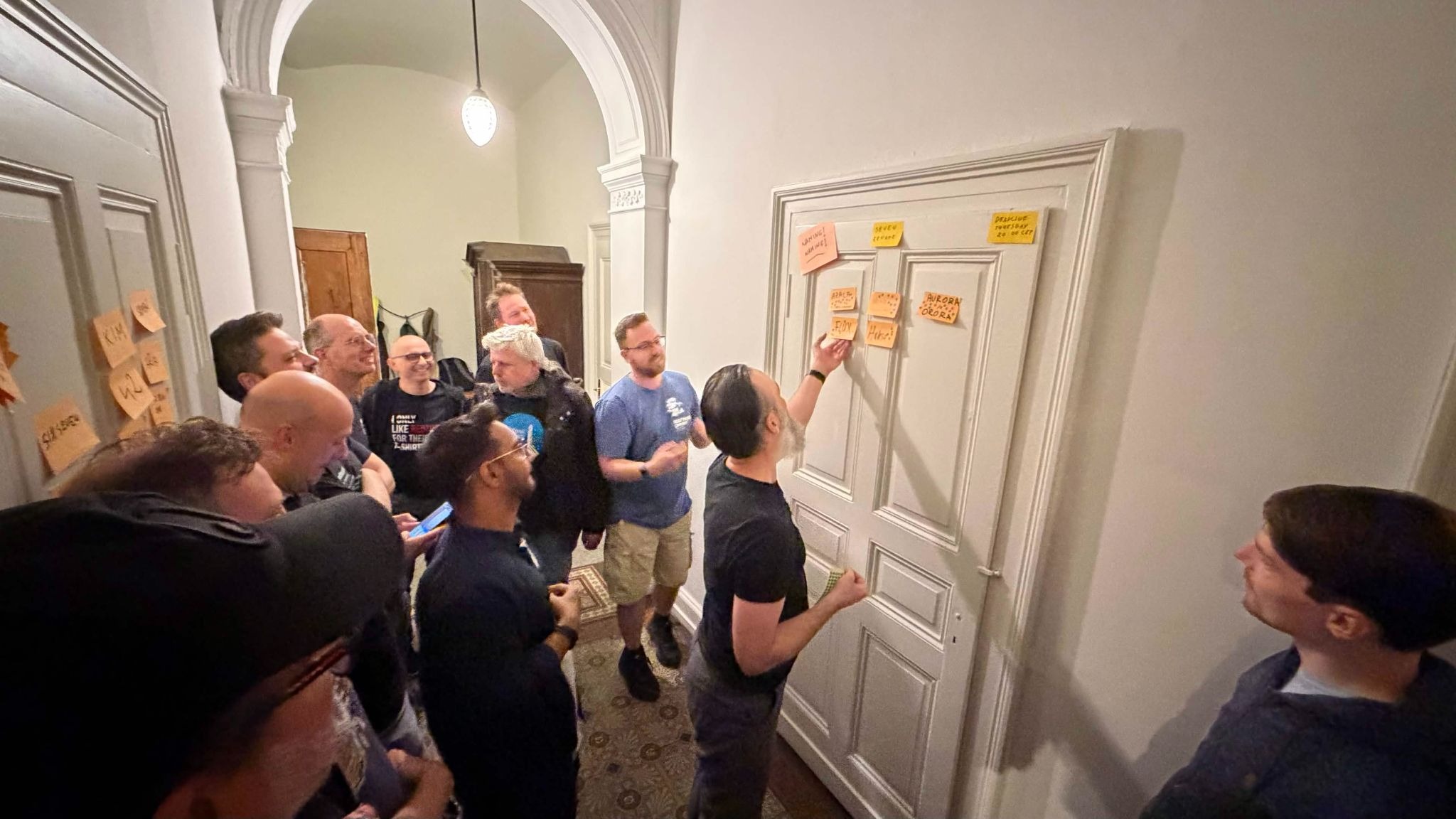
For the past two years, the Volto Team has been working on a project we temporarily called Seven. Two months ago, during the Beethoven Sprint, that project finally got a real name:
Plone Aurora.
Plone Aurora is the next generation of the React frontend for Plone. It's the result of nearly two years of development, experimentation, and learning. Built from the ground up on a modern technology stack, Plone Aurora takes everything we learned from Plone Volto and reimagines it for the next decade of the web.
The goal was to preserve what made Plone Volto successful while freeing ourselves from parts of the underlying technology that have become increasingly difficult to evolve and maintain.
Plone Aurora represents a new foundation for the future of frontend development in Plone.
What does this mean for Volto?
Development on Volto continues actively. With Plone 6.2 and Volto 19, the community delivered a long list of new features, improvements, and refinements. Plone Volto remains a first-class frontend for Plone and will continue to be supported and maintained for years to come. Looking ahead, there are plans for Plone Volto 20 to happen, and maintenance, bug fixes, documentation, and new features will continue to be delivered.
Plone Volto has served the community exceptionally well and continues to be the recommended frontend for production projects today.
Plone Aurora Evolution
Plone Aurora builds upon the Volto experience and explores what becomes possible when we revisit some of the architectural decisions made nearly a decade ago and take advantage of the capabilities offered by modern web technologies.
Plone Aurora is a long-term project aimed at Plone 7 and beyond. We are sharing it now because we want the community to be part of the journey from the beginning.
Just as Plone Volto didn’t appear overnight, Plone Aurora will mature in the open, shaped by contributors, feedback, and real-world use cases.
Why “Aurora”?
An aurora is one of nature’s most spectacular displays of light. Bright colors appear across the night sky when particles from the Sun interact with the Earth’s atmosphere.
Plone Aurora captures that imagery with its awe-inspiring editing and development experiences.
Plone Aurora brings these experiences that the community already knows from Volto with a completely new technological foundation. The result is something familiar and something new at the same time.
But there is another meaning that resonates even more strongly with the community. In Roman mythology, Aurora is the goddess of the dawn. Across many Romance languages—Spanish, Catalan, Portuguese, Italian, Romanian, and others—the word aurora still means the first light of day.
It's the moment when darkness gives way to possibility.
A new beginning.
A new chapter.
That is what Plone Aurora represents for Plone.
This project is about carrying forward everything we learned from building and maintaining Plone Volto, and using that experience to create a frontend platform that is faster, simpler, more maintainable, and ready for the future.
Just as dawn does not erase the night but grows naturally from it, Plone Aurora grows naturally from Plone Volto. It marks the beginning of a new era for frontend development in Plone.
What comes next?
Plone Aurora is still under active development, but it's already becoming usable and taking shape quickly.
If you would like to see Plone Aurora in action, you can already explore the public demo site:
The demo is updated regularly as development progresses and provides a preview of where the project is heading. While Plone Aurora is still under active development and not yet feature complete, it already showcases many of the ideas, patterns, and capabilities that will shape the future of frontend development in Plone.
Plone Aurora now has its own dedicated code repository and documentation website:
Having a dedicated repository and documentation reflects the project’s growing maturity and gives it a clear identity within the Plone ecosystem. It's the best place to follow development, report issues, contribute code and documentation, and participate in discussions about the future of Plone Aurora.
If you would like to contribute, join one of the upcoming Plone sprints, participate in discussions, review code, write documentation, or clone the repository and start experimenting yourself.
Whether you’re a developer, integrator, designer, or simply curious about what comes next for Plone, we invite you to try the demo, explore the codebase, and join the conversation.
There is still a lot of work ahead, but the foundations are in place and progress has been remarkable. We invite the entire community to try Plone Aurora, share feedback, and help us build the future of frontend development for Plone.
Welcome to Plone Aurora.